
Technology is the silent architect of human progress. It is the tool that has shaped our evolution, the force that has built civilizations, and the invisible thread connecting every modern comfort we take for granted. From the spark that lit the first fire to the algorithms that now power artificial intelligence, technology has continuously redefined what it means to be human.
In the 21st century, the pace of innovation has become so rapid that even the most visionary minds of the past could scarcely imagine the tools we use daily. Yet, behind every sleek device and every powerful system, lies a story — a story of human curiosity, persistence, and imagination.
This blog explores how technology evolved from primitive mechanisms into the intelligent systems that now dominate our lives, while also examining its influence on culture, economy, ethics, and our collective future.
The Dawn of Human Innovation
The earliest humans did not have silicon chips or the internet. Their technology was far more modest — shaped stones, sticks, and bones used as tools for hunting, protection, and survival. These primitive innovations were the foundation of human advancement.
When early humans learned to control fire, it wasn’t just warmth or light they gained; it was a new realm of possibility. Fire allowed them to cook food, drive predators away, and gather socially. That single discovery transformed the human lifestyle forever.
The invention of the wheel marked another turning point. Transportation became more efficient, and agriculture could flourish. Over time, humans began to experiment with metals, leading to the Bronze and Iron Ages. Each stage of progress added complexity to human societies and pushed the boundaries of what could be achieved.
The Mechanical Revolution: Machines Change Everything
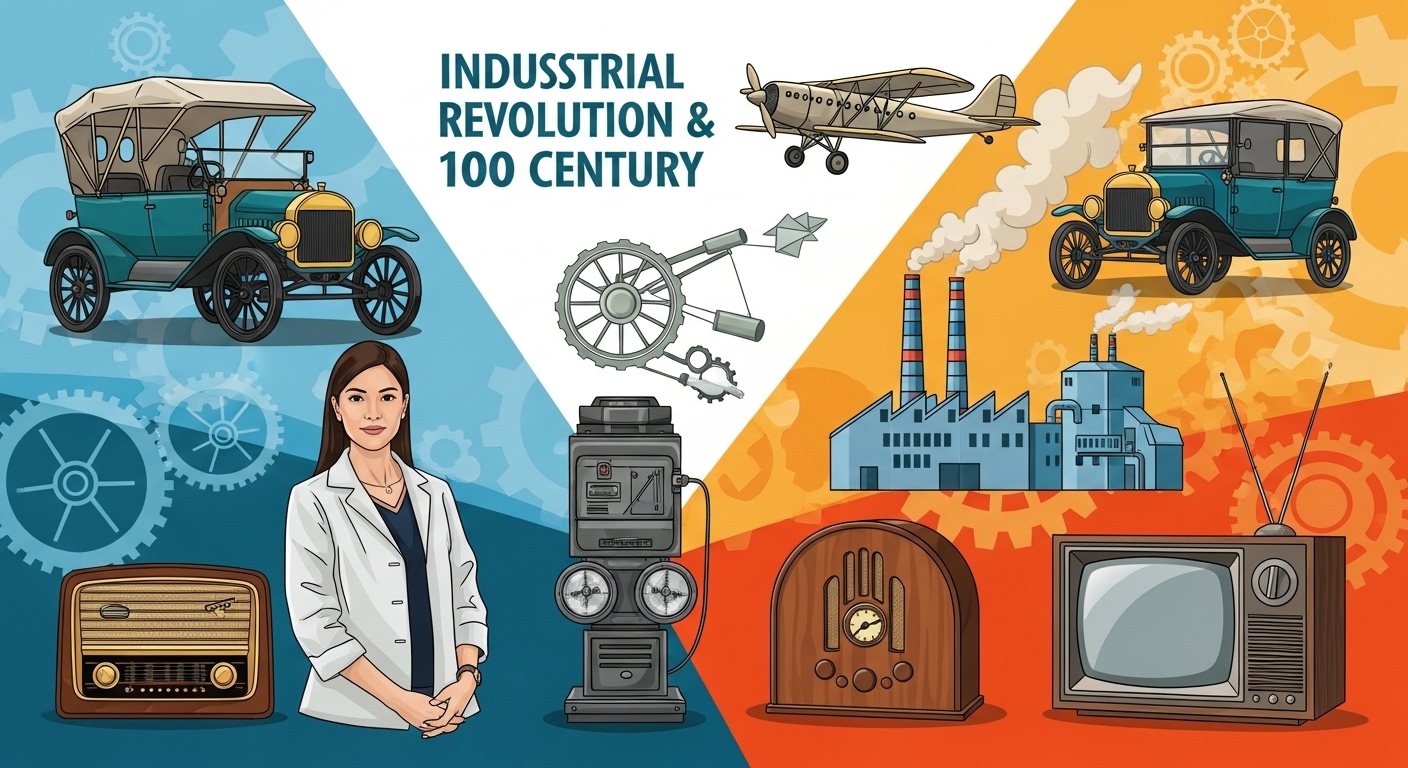
For centuries, progress was slow and steady. Then, the Industrial Revolution arrived in the 18th century, and the world changed almost overnight. Steam engines, textile machines, and mechanized production transformed economies from agriculture-based to industry-based systems.
The printing press, invented earlier by Johannes Gutenberg, had already set the stage for widespread literacy and communication. But now, the machines of the Industrial Revolution allowed goods to be mass-produced, cities to expand, and the concept of “modern life” to begin.
Factories replaced manual labor, and the idea of automation first took shape. The human hand, which once crafted every object, now gave way to the machine. This transition not only changed the economy but also redefined the relationship between humans and their tools.
Technology was no longer a mere helper; it was becoming a partner — one that could amplify human capabilities beyond imagination.
The Electrical Age: Powering a New Era
If the Industrial Revolution was about mechanical energy, the 19th and early 20th centuries were about electrical energy. Electricity became the heartbeat of modern civilization.
With Thomas Edison’s invention of the light bulb, nights were no longer dark. Nikola Tesla’s alternating current revolutionized how energy was transmitted, enabling cities to shine and industries to thrive. Telegraphs, telephones, and radios followed — shrinking distances and making communication instantaneous for the first time in history.
Electricity also led to innovations in medicine, manufacturing, and entertainment. The world started to hum with the rhythm of motors, circuits, and signals. Humanity was entering an age of connectedness, where power could flow invisibly through wires and bring life to machines.
The Digital Revolution: The Birth of Computing
While electricity powered machines, a new kind of power emerged in the mid-20th century — the power of data and computation. The first computers were enormous, room-sized machines that could perform calculations faster than any human brain.
ENIAC, UNIVAC, and other early models paved the way for what would become one of the most transformative inventions in history: the personal computer. As computers became smaller, cheaper, and more powerful, they began to enter homes, schools, and offices.
By the 1980s and 1990s, computers were not just tools for scientists or corporations; they were becoming a central part of daily life. Word processing replaced typewriters. Digital spreadsheets replaced paper ledgers. Games, software, and graphics began to define a new kind of culture — one that was built not from steel or stone, but from code.
The Internet: A Global Web of Connection
If the computer was a revolution, the internet was an explosion. Born from military and academic networks in the late 20th century, the internet quickly grew into the backbone of global communication.
The World Wide Web turned the internet into something accessible and usable by ordinary people. For the first time, knowledge was free-flowing and decentralized. A student in a remote village could access the same information as a researcher in a major city.
Email replaced letters. Online forums created global communities. Eventually, social media platforms emerged, changing how humans interacted forever.
The internet blurred the line between local and global. News, entertainment, and even personal relationships began to happen in virtual spaces. It democratized knowledge — but it also created new challenges, from misinformation to digital addiction.
The digital revolution had made the world smaller, yet more complex than ever.
The Rise of Mobile Technology
The next major leap came with the invention of smartphones. What once required an entire desk — a phone, a camera, a computer, and a notepad — now fit in the palm of a hand.
The smartphone became not just a device, but an extension of identity. It connected people to the internet everywhere, at all times. It tracked health, guided travel, stored memories, and mediated nearly every form of communication.
Mobile technology reshaped industries. Banking went online, shopping became e-commerce, and entire businesses were built on mobile applications.
This new mobility created a world that never sleeps. Information became immediate. Work and leisure began to blur. Society entered what many call the “always-on” culture, where being disconnected feels almost unnatural.
Artificial Intelligence: Machines That Think
Perhaps the most profound transformation in modern technology is artificial intelligence. Once a dream confined to science fiction, AI has now become a tangible and rapidly advancing reality.
AI systems can analyze enormous amounts of data, recognize patterns, and make decisions — often faster and more accurately than humans. From self-driving cars to medical diagnostics, from virtual assistants to predictive algorithms, AI is infiltrating every corner of modern life.
Machine learning and neural networks have allowed computers to not just follow commands, but to learn from experience. This has created both excitement and anxiety.
AI promises to revolutionize industries, make labor more efficient, and even solve complex global challenges like climate modeling and disease prevention. Yet, it also raises questions about privacy, ethics, and employment.
What happens when machines can think, learn, and create art, music, or literature? What does creativity mean when algorithms can compose symphonies or paint portraits indistinguishable from human-made works?
These are not just technical questions — they are philosophical ones. The age of AI is as much about redefining humanity as it is about advancing machines.
The Cloud and the Era of Data
Alongside AI came another invisible revolution: the cloud. Cloud computing allowed data and software to exist beyond personal devices, accessible from anywhere, anytime.
Instead of files being stored on a single computer, they now live in vast digital storage systems distributed across the world. This made collaboration seamless, businesses more flexible, and innovation faster.
But it also introduced new forms of dependency. Data privacy became a major concern, as companies collected vast amounts of personal information. The question of who owns data — the user or the platform — became one of the defining debates of the digital era.
Still, cloud computing has transformed how we live and work. It powers streaming platforms, online education, and the entire ecosystem of remote work that became vital during the pandemic years.
The Internet of Things: A Connected World
As if connecting people weren’t enough, technology began connecting things. The Internet of Things (IoT) refers to the network of physical devices — from refrigerators to streetlights — that communicate and share data with each other.
Smart homes, wearable health trackers, and automated factories are all part of this new ecosystem. A refrigerator can now order milk when it runs low. A car can alert the driver about traffic patterns in real time.
This interconnectedness has made daily life more efficient, but it also increased vulnerabilities. A single cyberattack could now affect millions of devices simultaneously.
The challenge is clear: as everything becomes smarter and more connected, cybersecurity must evolve just as quickly. The next frontier is not just about innovation — it’s about protection.
The Human Cost of Technological Progress
For every benefit technology brings, there are trade-offs. Automation and AI have displaced many traditional jobs. Digital addiction and social media dependency are affecting mental health worldwide. Privacy is becoming an increasingly rare commodity.
Technology has given humans immense power, but not always the wisdom to wield it responsibly. The same algorithms that recommend movies can also create political echo chambers. The same platforms that connect families can also spread hate and misinformation.
As we continue to innovate, it becomes vital to balance progress with purpose — to ensure that technology serves humanity, not the other way around.
The Future of Technology: Beyond the Horizon
What lies ahead? If history is any guide, the next few decades will be more transformative than the last century.
Quantum computing promises to solve problems that today’s computers cannot even begin to process. Biotechnology and nanotechnology are merging to create medical miracles that could cure diseases once thought incurable.
Virtual reality and augmented reality are beginning to redefine education, entertainment, and even human interaction. Imagine attending a concert on the other side of the world without leaving your room, or learning anatomy by walking inside a 3D human body simulation.
Meanwhile, space technology is reigniting humanity’s oldest dream — to explore the stars. Private companies are launching rockets, planning moon bases, and eyeing Mars as the next frontier.
The question is not whether we can build these technologies, but whether we can build them wisely. The next revolution will not be about machines alone, but about the ethics and philosophies guiding their creation.
Technology and the Human Spirit
Amid all these advancements, it is easy to forget one truth: technology is not separate from humanity; it is an expression of it.
Every invention, from the wheel to the web, has been born from the same human desire — to overcome limitations. Technology reflects our creativity, our ambition, and our flaws.
We use it to build bridges and cities, but also to wage wars. We design machines to heal and to harm. Technology magnifies both the best and the worst within us.
This duality is what makes our relationship with technology so profound. It is not just a story of progress, but a mirror showing us who we truly are.
A World Shaped by Code
Today’s world runs on code — invisible strings of logic written by human hands but executed by machines. Code governs how we communicate, how we trade, how we learn, and even how we love.
It is the new language of civilization. Those who understand it shape the future; those who ignore it risk being left behind.
Yet, coding is not just a technical skill; it is a form of creativity. A line of code can create an app that connects millions or a tool that solves real-world problems.
As automation increases, learning the language of technology is becoming as essential as reading or writing. It empowers individuals to shape the digital landscapes they inhabit.
The Ethical Dimension of Innovation
As powerful as technology becomes, ethics must guide its path. Without ethical boundaries, innovation risks turning into exploitation.
Artificial intelligence must be developed with fairness, transparency, and accountability. Data collection must respect privacy. Automation must be balanced with opportunities for human employment and creativity.
Tech companies and governments face a growing responsibility to regulate technology not to stifle progress but to protect humanity.
Ethics should not be an afterthought; it should be the foundation of every new invention. A technology that harms society, even unintentionally, is not progress — it is regression wrapped in innovation.
Education in the Age of Technology
The digital era demands a new kind of literacy. Beyond reading and writing, we must teach digital literacy, critical thinking, and adaptability.
Children born today will live in a world where artificial intelligence, virtual environments, and genetic engineering are normal. Education systems must prepare them not just to use these tools but to question and improve them.
Technology in education has already broken traditional barriers. Online platforms allow anyone to learn from anywhere. Virtual classrooms and adaptive learning systems personalize education like never before.
The future belongs to those who can think creatively, learn continuously, and navigate the intersection of technology and humanity.
Conclusion: The Human Story Continues
From the first stone tool to the latest AI algorithm, technology has always been a story of humanity reaching beyond its grasp. It is a story of transformation, of trial and triumph.
We stand today at the threshold of possibilities our ancestors could never imagine — yet the questions remain the same: How will we use what we create? What kind of world will our technologies build for us and the generations to come?
The future of technology is not inevitable; it is intentional. It will be shaped not only by engineers and scientists but by the collective values of society.
In the end, technology is not the hero of this story — humanity is. Every tool, every machine, every piece of code is a reflection of our boundless curiosity and our enduring spirit to explore, improve, and imagine.
As we step into the next century of innovation, may we remember that progress is not measured by how advanced our machines become, but by how much they help us become more human.