
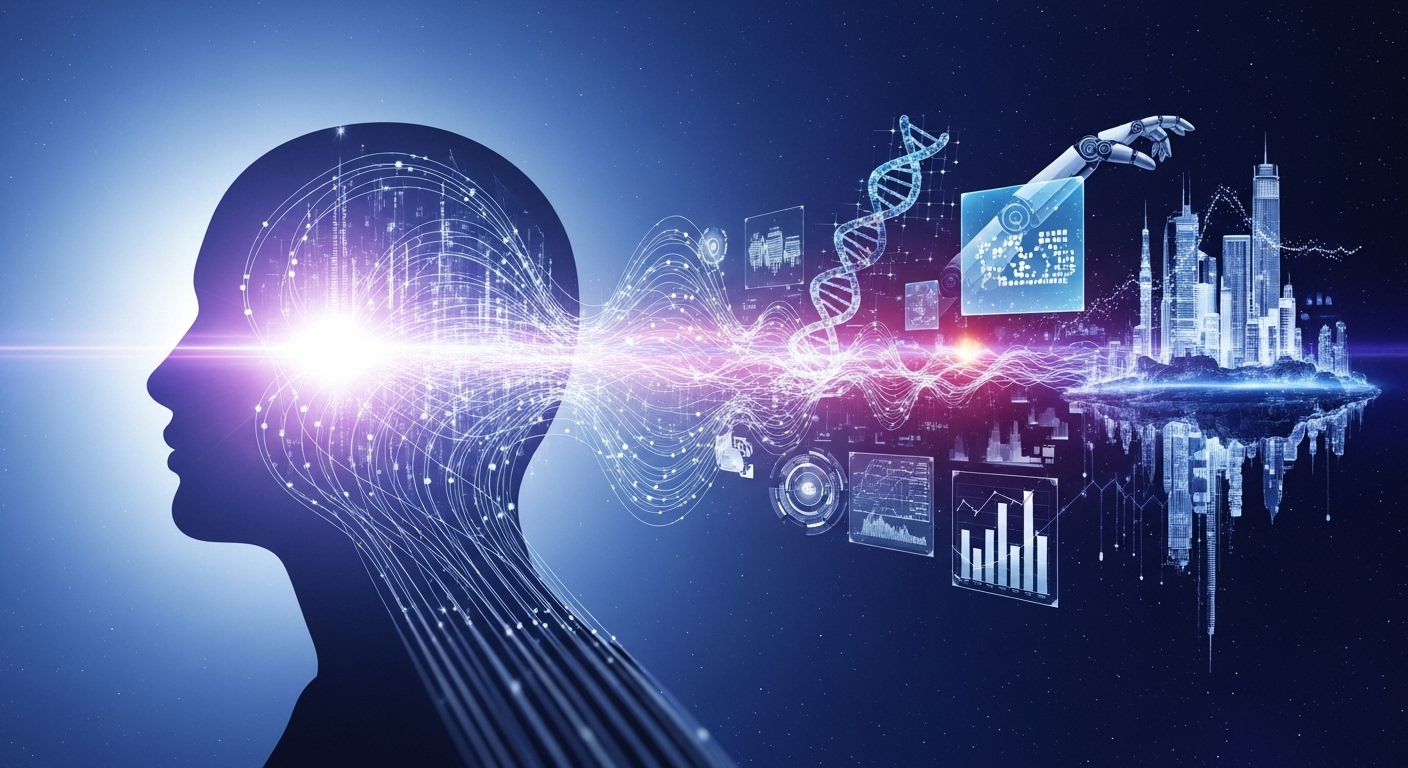
Technology has become the heartbeat of human civilization. It is impossible to imagine modern life without the comfort, convenience, and complexity that technology provides. From the invention of the wheel to the development of artificial intelligence, every technological leap has redefined how people live, work, and connect with one another. Over centuries, human creativity and curiosity have driven innovation, turning imagination into reality. In today’s world, technology is not just a tool; it is a living ecosystem that continues to shape societies, economies, and individual lives.
The Roots of Innovation: How It All Began
Humanity’s relationship with technology began in the most primitive way — with the use of tools made from stones, sticks, and bones. Early humans invented simple tools to hunt, cook, and build shelter. This was the foundation of technological progress. The discovery of fire was one of the earliest breakthroughs, as it provided warmth, safety, and a new method of preparing food. Over time, humans learned to craft metals, which led to the development of weapons, agricultural tools, and eventually machinery. The Agricultural Revolution marked a turning point, as humans moved from nomadic lifestyles to settled farming communities. With farming came new technologies — irrigation systems, plows, and watermills — which allowed civilizations to grow. Technology at this stage was purely mechanical and aimed at survival. However, it laid the groundwork for a deeper curiosity about the natural world and how it could be manipulated to serve human needs.
The Industrial Revolution: Birth of Modern Technology
The late 18th and early 19th centuries witnessed one of the most significant transformations in human history — the Industrial Revolution. This period changed everything: how goods were produced, how people worked, and how societies functioned. Steam engines powered factories, enabling mass production of textiles, machinery, and other goods. The introduction of the telegraph revolutionized communication, shrinking the world by allowing people to send messages across long distances almost instantly. The Industrial Revolution marked the birth of modern technology as we know it. For the first time, machines replaced manual labor on a large scale, leading to the rise of cities, transportation networks, and industrial economies. While this revolution brought prosperity and progress, it also introduced challenges such as labor exploitation and environmental pollution. Nonetheless, the technological momentum it created was unstoppable.
The Digital Age: Dawn of Computers and the Internet
By the mid-20th century, humanity entered the Digital Age. The invention of computers transformed every aspect of life. Initially, computers were massive, room-sized machines used by governments and research institutions. However, rapid advancements in microprocessors and software development led to the creation of personal computers, bringing digital power to homes and offices. The 1980s and 1990s saw an explosion of computer usage, from business management to gaming and entertainment. The Internet’s emergence in the 1990s changed the course of history. Suddenly, information was no longer confined to books or libraries — it was accessible from anywhere. The World Wide Web democratized knowledge and gave rise to entirely new industries. E-commerce, digital communication, and social media platforms became the defining features of this era. The digital revolution redefined global communication, allowing people from different corners of the world to connect in seconds. It also changed economies, as data became the new currency of the 21st century.
The Rise of Mobile Technology
After computers came the next major transformation — mobile technology. The early mobile phones were bulky and limited to voice calls, but they symbolized freedom from stationary communication. As technology advanced, mobile phones evolved into multifunctional smart devices. The launch of smartphones brought together computing, internet browsing, photography, entertainment, and communication in one handheld device. Mobile applications became a part of daily life, enabling people to shop, learn, navigate, and even work remotely. With the development of 4G and now 5G networks, mobile connectivity has reached speeds once unimaginable. Mobile technology has also redefined industries. From ride-sharing and food delivery to banking and health monitoring, everything can be done through mobile apps. In developing nations, mobile technology has even bridged the gap between rural and urban communities, enabling digital inclusion and financial access for millions.
The Internet of Things: A Connected World
As technology advanced, connectivity expanded beyond computers and phones. This led to the emergence of the Internet of Things (IoT) — a network of interconnected devices that communicate with each other through the internet. Everyday objects such as refrigerators, cars, thermostats, and even streetlights are now equipped with sensors and connectivity features. This allows them to collect and exchange data, improving efficiency and convenience. In smart homes, IoT devices automate lighting, security, and temperature control. In industries, they monitor machinery performance and predict maintenance needs. The potential of IoT extends to healthcare as well, where wearable devices track heart rate, sleep patterns, and physical activity. By turning data into actionable insights, IoT is paving the way for smarter cities, sustainable resource management, and improved quality of life.
Artificial Intelligence: The Era of Thinking Machines
Artificial Intelligence (AI) represents one of the most profound developments in modern technology. What was once the subject of science fiction has become a powerful reality. AI systems can learn, reason, and make decisions based on data. From virtual assistants that schedule meetings to algorithms that recommend movies, AI is everywhere. Machine learning, a subset of AI, allows computers to improve their performance over time without explicit programming. Deep learning, which mimics the human brain’s neural networks, has enabled breakthroughs in image recognition, language processing, and autonomous systems. AI is transforming industries such as healthcare, where it assists in diagnosing diseases and discovering drugs, and finance, where it detects fraud and predicts market trends. However, AI also raises important ethical questions. As machines become more capable, concerns about job displacement, privacy, and algorithmic bias have emerged. The challenge now is to ensure that AI is used responsibly, with transparency and fairness at its core.
The Cloud Revolution: Storing the World in the Sky
Before cloud computing, storing and managing data required physical infrastructure. Businesses had to maintain servers, while individuals relied on hard drives and USBs. Cloud technology changed that completely. It allows users to store, access, and process data over the internet rather than on local devices. This shift has revolutionized how people and organizations handle information. Cloud computing provides scalability, flexibility, and cost efficiency. It powers streaming platforms, online collaboration tools, and remote learning systems. During the global shift to remote work, cloud-based tools became essential for continuity and productivity. The cloud also underpins emerging technologies like AI, IoT, and big data analytics. However, as more data moves online, cybersecurity has become a critical concern. Protecting sensitive information from breaches and misuse remains one of the defining challenges of the digital era.
The Role of Big Data and Analytics
Data has become the new oil of the modern economy. Every click, search, and interaction generates data that can be analyzed to uncover patterns, trends, and insights. Big Data analytics enables businesses and governments to make informed decisions based on this vast information flow. In healthcare, big data helps predict disease outbreaks and improve patient outcomes. In marketing, it allows companies to personalize products and advertisements. Governments use data analytics for urban planning, resource allocation, and crime prevention. The power of data lies in its ability to transform raw information into actionable knowledge. However, the explosion of data also raises privacy concerns. Users often share personal information unknowingly, and without proper regulation, this can be exploited. Balancing innovation with privacy protection is one of the key challenges of our time.
Robotics and Automation: The Future of Work
Automation is not new, but recent advancements in robotics have taken it to a new level. Robots are now used in manufacturing, logistics, healthcare, and even hospitality. They perform tasks with precision, speed, and consistency that surpass human capabilities. In factories, robots assemble cars and electronics. In hospitals, robotic surgery enables minimally invasive procedures with high accuracy. Service robots are being deployed in restaurants, hotels, and airports to enhance customer experience. Automation also plays a crucial role in addressing labor shortages and improving safety in hazardous environments. However, the rise of robotics has reignited debates about the future of work. As machines take over repetitive and dangerous jobs, humans must adapt by focusing on creativity, emotional intelligence, and complex problem-solving — skills that machines cannot easily replicate. The key will be education and reskilling, ensuring that the workforce evolves alongside technology.
Virtual and Augmented Reality: Blurring the Lines of Reality
Virtual Reality (VR) and Augmented Reality (AR) are changing how people experience the world. VR immerses users in a completely digital environment, while AR overlays digital information onto the real world. These technologies have applications far beyond gaming. In education, VR allows students to explore historical sites or complex scientific concepts in 3D. In healthcare, surgeons use AR to visualize anatomy during operations. Architects and designers use VR to create and test prototypes before construction begins. The entertainment industry is also being redefined, as virtual concerts, immersive movies, and digital tourism gain popularity. As VR and AR become more affordable and accessible, they will likely play a major role in social interaction, remote collaboration, and digital storytelling.
Renewable Energy Technology: Powering a Sustainable Future
As the global population grows, the demand for energy increases. Traditional energy sources like coal and oil have contributed to climate change, making the shift toward renewable energy critical. Technology is leading this transformation. Solar panels, wind turbines, and hydroelectric systems are becoming more efficient and affordable. Advances in battery storage and smart grids are enabling the integration of renewable energy into national power systems. Electric vehicles are replacing fossil-fuel cars, driven by improvements in battery technology and charging infrastructure. Smart cities are adopting energy-efficient designs and IoT-based monitoring systems to reduce waste. Renewable energy technology not only helps the environment but also creates new economic opportunities and jobs in green industries. The transition to sustainable technology marks a step toward a cleaner, healthier planet.
Biotechnology and Human Enhancement
Biotechnology is another frontier reshaping the boundaries of science and humanity. It involves the use of biological systems and living organisms to develop products and solutions. From genetically modified crops that resist pests to gene therapies that cure inherited diseases, biotechnology holds immense promise. CRISPR, a gene-editing technology, has opened the door to precise genetic modifications, potentially eliminating genetic disorders. In medicine, bioprinting allows scientists to create tissues and organs for transplantation. Biotechnology also extends to food production, environmental conservation, and even synthetic biology, where new organisms are designed for specific purposes. While these developments are groundbreaking, they also raise ethical questions about human enhancement, genetic privacy, and the limits of scientific intervention. Balancing innovation with ethics remains essential in biotechnology’s future.
The Future: Quantum Computing and Beyond
Quantum computing represents the next great leap in technological evolution. Unlike classical computers, which process information using bits (0s and 1s), quantum computers use qubits that can represent both simultaneously. This allows them to perform complex calculations at speeds unimaginable for traditional systems. Quantum computing could revolutionize fields such as cryptography, material science, and drug discovery. However, it is still in its early stages, and challenges like error correction and stability remain. Beyond quantum computing, emerging technologies like nanotechnology, space exploration systems, and brain-computer interfaces are pushing the boundaries of what is possible. Humanity stands on the brink of a new era where the physical and digital worlds merge seamlessly, creating possibilities we have only begun to imagine.
Challenges in the Technological Era
While technology has brought countless benefits, it has also introduced new challenges. Cybersecurity threats, misinformation, privacy violations, and digital addiction are growing concerns. The rapid pace of change can leave individuals and communities struggling to adapt. Economic inequality can deepen as access to advanced technology remains uneven across regions. Moreover, the environmental cost of producing electronic devices and managing e-waste continues to rise. Ethical dilemmas around AI, surveillance, and data ownership demand careful governance. As technology becomes more powerful, it is crucial to ensure that its use aligns with human values, fairness, and sustainability.
Humanity and Technology: A Partnership for Progress
At its core, technology reflects humanity itself — our creativity, ambition, and desire to improve life. Every innovation, from the printing press to artificial intelligence, has been driven by human imagination. However, technology should remain a servant, not a master. The future of technology depends not only on what we create but also on how we choose to use it. Education, regulation, and ethical awareness will play vital roles in shaping a technological future that benefits everyone. The ultimate goal is not merely to build smarter machines but to build a smarter, more compassionate world.
Conclusion: The Next Chapter of Human Ingenuity
The story of technology is the story of humanity’s quest for progress. From primitive tools to intelligent systems, we have come a long way. Each generation inherits the innovations of the past and builds upon them, pushing the boundaries further. As we step into the future, technologies like AI, quantum computing, biotechnology, and renewable energy will continue to redefine existence. Yet, amidst this rapid change, the human spirit remains the constant force driving innovation. The challenge of the next century will not only be to create new technologies but to ensure they serve the greater good. Technology, when guided by wisdom and purpose, has the power to make the world more connected, sustainable, and humane than ever before.