
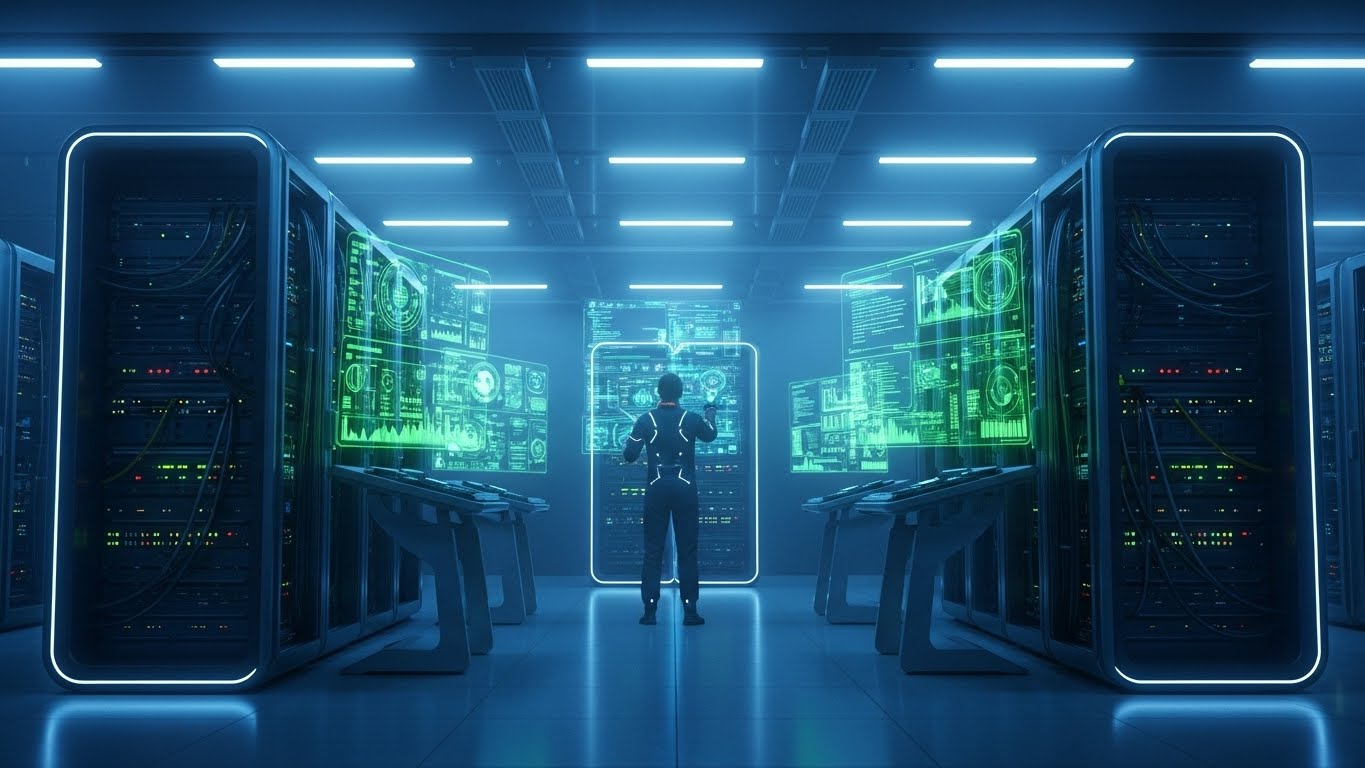
Technology has always been a driving force in shaping the world as we know it. From the earliest discoveries of the wheel and the printing press to the advent of computers and smartphones, each breakthrough has had profound effects on society, culture, and everyday life. Today, as we stand at the crossroads of rapid technological innovation, the possibilities seem limitless. Emerging technologies like artificial intelligence (AI), quantum computing, the Internet of Things (IoT), and biotechnology are already starting to redefine what’s possible. But what exactly does the future of technology look like, and how will it continue to transform industries, economies, and lives? In this blog post, we explore some of the most exciting advancements in technology and discuss their potential impact on the world.
The Rise of Artificial Intelligence: More Than Just a Trend
Artificial Intelligence, or AI, has evolved far beyond its science fiction roots. Once a concept reserved for futuristic films, AI has now permeated virtually every aspect of modern life. From virtual assistants like Siri and Alexa to self-driving cars, AI is becoming an integral part of our daily routines. The key to AI’s rapid expansion lies in its ability to process vast amounts of data and make decisions faster and more accurately than humans.
AI’s potential is limitless, but its applications are particularly transformative in sectors like healthcare, finance, and customer service. In healthcare, AI is already being used to diagnose diseases, analyze medical images, and even predict patient outcomes. Algorithms can sift through vast datasets of medical records to find patterns that might be overlooked by human doctors, offering personalized treatment recommendations. In the financial world, AI is revolutionizing everything from algorithmic trading to fraud detection, making financial systems faster, safer, and more efficient.
Despite the many benefits, the rise of AI also raises important ethical and societal questions. How do we ensure that AI systems are designed to be fair, transparent, and accountable? What are the long-term consequences of widespread automation on employment? As AI continues to evolve, these questions will play a crucial role in how we integrate this technology into society.
Quantum Computing: Unlocking Unimaginable Power
While classical computers have made incredible strides in recent decades, they are still fundamentally limited by their design. Quantum computing, however, promises to break through these barriers by harnessing the unique properties of quantum mechanics. Unlike traditional bits, which can either be a 0 or a 1, quantum bits (qubits) can exist in multiple states simultaneously. This allows quantum computers to process and solve complex problems at an unprecedented scale.
Although quantum computing is still in its early stages, its potential is staggering. Problems that would take classical computers millions of years to solve—such as simulating molecular structures or optimizing supply chains—could be solved in a fraction of the time using quantum algorithms. Industries such as pharmaceuticals, materials science, and logistics stand to benefit immensely from this technology. For example, quantum computers could revolutionize drug discovery by accurately modeling the interactions between molecules, potentially leading to the development of life-saving medications at a faster rate.
However, there are also significant hurdles to overcome. Quantum computers are incredibly sensitive to their environments, requiring extremely cold temperatures to function properly. Additionally, developing reliable quantum algorithms and systems is a huge challenge. But as research in quantum computing continues to advance, the day may not be far off when quantum computers become a routine part of scientific and industrial work.
The Internet of Things (IoT): Connecting the World
The Internet of Things (IoT) refers to the growing network of devices, appliances, and sensors that are connected to the internet, allowing them to collect and share data. While IoT is already widespread in smart homes with devices like thermostats, lighting systems, and security cameras, its potential reaches far beyond just home automation.
In industries such as manufacturing, agriculture, and healthcare, IoT is being used to create “smart” environments that can monitor and optimize operations in real-time. For example, in agriculture, IoT sensors can track soil moisture, temperature, and crop health, allowing farmers to make more informed decisions and reduce waste. In healthcare, wearable devices can continuously monitor vital signs, alerting doctors and patients to potential issues before they become serious problems.
As IoT devices become more integrated into our lives and work environments, the amount of data being generated will grow exponentially. This massive influx of data will require advanced analytics and processing tools to make sense of it all. The ability to harness this data will be a game-changer for businesses and individuals alike, leading to more efficient operations, better decision-making, and improved quality of life.
Biotechnology and Genetic Engineering: The New Frontier
Biotechnology is an area where technology meets biology to create innovative solutions for everything from medicine to food production. Advances in genetic engineering and gene editing, particularly CRISPR technology, are opening up new frontiers in medicine. CRISPR allows scientists to edit genes with unprecedented precision, offering the potential to cure genetic disorders, eliminate certain types of cancer, and even enhance human capabilities.
One of the most promising applications of biotechnology is personalized medicine. By sequencing an individual’s genome and understanding their unique genetic makeup, doctors can tailor treatments that are more effective and less invasive. For example, cancer therapies can be customized to target the specific mutations present in a patient’s cancer cells, leading to higher success rates and fewer side effects.
Additionally, biotechnology has the potential to revolutionize food production. With the world’s population continuing to grow, the demand for food is increasing, and biotechnology could provide solutions for feeding the planet. Genetically modified crops that are resistant to pests or drought could help farmers produce higher yields with fewer resources. Lab-grown meat, produced from animal cells, offers a more sustainable and ethical alternative to traditional livestock farming.
However, the rise of biotechnology also brings ethical considerations. The ability to edit genes raises concerns about unintended consequences and the potential for “designer babies.” There are also concerns about the environmental impact of genetically modified organisms (GMOs) and the ethics of creating lab-grown animals. As these technologies advance, society will need to navigate these challenges carefully to ensure that their benefits outweigh the risks.
Virtual and Augmented Reality: The Future of Immersive Experiences
Virtual Reality (VR) and Augmented Reality (AR) are technologies that are rapidly gaining traction in industries ranging from entertainment to education to healthcare. VR creates fully immersive digital environments, while AR overlays digital information onto the real world, enhancing our physical surroundings with virtual elements.
In entertainment, VR is revolutionizing gaming and movies, offering experiences that were previously unimaginable. Instead of sitting in front of a screen, VR enables users to step inside the action, creating a more engaging and interactive experience. In education, VR and AR are being used to simulate real-world scenarios, from medical procedures to historical events, providing students with a more hands-on, immersive learning experience.
In healthcare, VR is being used for pain management, rehabilitation, and mental health therapy. For example, patients undergoing physical therapy can use VR to perform exercises in a virtual environment, making the process more enjoyable and motivating. In mental health, VR has been used to treat phobias and PTSD by gradually exposing patients to the triggers of their fears in a controlled and safe environment.
Despite the tremendous potential of VR and AR, there are challenges to overcome, particularly in terms of hardware and user experience. VR headsets can be bulky, uncomfortable, and expensive, which limits their accessibility. As technology continues to improve, however, we can expect to see more seamless and affordable VR and AR devices that will transform how we interact with the digital world.
Autonomous Vehicles: Driving Into the Future
Self-driving cars are one of the most exciting and potentially disruptive technologies on the horizon. Autonomous vehicles (AVs) use a combination of sensors, cameras, and artificial intelligence to navigate and drive without human intervention. The promise of AVs goes far beyond convenience; they have the potential to drastically reduce traffic accidents, improve mobility for disabled and elderly individuals, and make transportation more efficient.
AVs are already being tested on public roads, and companies like Tesla, Waymo, and Uber are at the forefront of this revolution. In addition to personal transportation, self-driving trucks could revolutionize the logistics industry, reducing costs and improving delivery times. The ability to automate long-haul trucking could also address labor shortages and create more efficient supply chains.
However, the widespread adoption of autonomous vehicles raises several challenges. Legal and regulatory frameworks are still being developed, and questions about liability in the event of an accident remain unresolved. There are also concerns about job displacement, particularly for professional drivers, as autonomous vehicles become more common.
Conclusion: Embracing the Future of Technology
As we look ahead to the future, it is clear that technology will continue to be a driving force behind innovation, growth, and societal change. From AI and quantum computing to biotechnology and self-driving cars, the possibilities seem endless. The challenge will be in managing these technologies responsibly, ensuring that they are used to benefit humanity as a whole while addressing the ethical and societal issues they raise.
The rapid pace of technological advancement means that we are living in a time of unprecedented change. Embracing these innovations, while remaining mindful of their implications, will allow us to build a future that is not only more connected, efficient, and intelligent but also more compassionate and inclusive.
The future of technology is bright, but it’s up to us to shape it in a way that reflects our values, priorities, and collective vision for a better world.