The way people consume entertainment has changed drastically over the last two decades. Gone are the days when television schedules and DVD collections dictated how and when we watched our favorite shows and movies. Today, streaming platforms dominate the landscape, offering vast libraries of content accessible at any time with just an internet connection. These platforms have become central to modern culture, shaping what we watch, how we discuss entertainment, and even how stories are produced. With so many options available, comparing the top streaming platforms is essential for anyone looking to choose the best service for their needs. Each platform brings its own unique strengths, weaknesses, and defining features, making the streaming world as competitive as the entertainment industry itself.
The Rise of Streaming Platforms
The evolution of streaming platforms began with the simple idea of replacing physical media and live broadcasts with digital access. Early services were limited in selection and quality, but they laid the foundation for what would become a global industry. With advancements in internet speed, mobile technology, and cloud storage, streaming platforms expanded rapidly, providing on-demand access to television shows, movies, documentaries, and even live events. Today, streaming has overtaken traditional cable subscriptions in many households, and platforms continue to invest billions in original programming to attract and retain subscribers. The rise of streaming represents not only a technological shift but also a cultural transformation, as people are now more empowered than ever to decide what, when, and where to watch.
Netflix and the Pioneer Advantage
Netflix is often credited as the pioneer that pushed streaming into the mainstream. Starting as a DVD rental service, it transitioned into streaming in the late 2000s and quickly became a household name. Netflix built its reputation by offering a wide library of licensed shows and movies, but its greatest impact came with the creation of original content. Hits like Stranger Things, The Crown, and Narcos demonstrated that streaming platforms could compete with traditional studios and networks. Netflix has since expanded globally, producing content in dozens of languages and catering to diverse audiences. Its strength lies in its vast variety of genres and its algorithm-driven recommendations, which personalize the experience for each user. However, Netflix faces challenges in maintaining its dominance as more competitors enter the market and reclaim their licensed content, forcing it to rely even more heavily on original productions.
Amazon Prime Video and the Power of Bundling
Amazon Prime Video has become one of the leading streaming platforms by leveraging the power of bundling. As part of the broader Amazon Prime subscription, the service benefits from the massive reach of Amazon’s ecosystem. Prime Video offers a mix of licensed films, popular TV shows, and a growing catalog of original programming, including award-winning series like The Marvelous Mrs. Maisel and The Boys. Its interface also allows users to rent or buy movies not included in the subscription, creating a hybrid model that combines streaming with digital ownership. A significant advantage of Prime Video is its integration with Amazon’s shopping and delivery services, making it an attractive choice for users who want more than just streaming. Yet, despite its strengths, Prime Video sometimes struggles with content discovery due to its interface design, and it competes fiercely with platforms that are solely dedicated to entertainment.
Disney Plus and the Power of Franchises
Disney Plus made an immediate impact when it launched, thanks to its unrivaled access to some of the most beloved franchises in entertainment history. With exclusive rights to Disney classics, Pixar films, Marvel blockbusters, and the Star Wars universe, the platform quickly established itself as a must-have for families and fans of these brands. Its appeal lies in nostalgia combined with fresh original programming, such as The Mandalorian and WandaVision, which have become cultural phenomena. Disney Plus also benefits from its strategy of simultaneous theatrical and streaming releases, giving subscribers access to major films soon after or even during their cinema runs. While its focus on family-friendly content sets it apart, the platform’s narrower scope compared to Netflix or Prime Video means it caters primarily to audiences invested in the Disney brand. Still, its rapid growth and global expansion prove the power of exclusive franchises in shaping the streaming industry.
Hulu and the Advantage of Current TV
Hulu occupies a unique space in the streaming landscape by offering next-day access to episodes from many current television shows. This makes it particularly appealing to viewers who want to keep up with ongoing series without subscribing to traditional cable. In addition to its television partnerships, Hulu has developed a strong library of original content, including acclaimed series like The Handmaid’s Tale. Hulu also provides flexible subscription tiers, from ad-supported plans to premium options with no commercials, giving users choices based on their budget. Its partnerships with other services and add-ons, such as access to live TV and premium channels, make Hulu a versatile platform. However, its availability is limited in certain international markets, which restricts its global reach compared to competitors like Netflix and Disney Plus.
HBO Max and Prestige Storytelling
HBO Max has built its reputation on the strength of HBO’s legacy of prestige television. With shows like Game of Thrones, The Sopranos, and Succession, HBO established itself as a leader in high-quality storytelling long before the streaming boom. HBO Max expands on this legacy by offering not only HBO’s catalog but also a wide range of movies, series, and original productions from Warner Bros. and other studios. The platform has positioned itself as a destination for viewers seeking sophisticated and critically acclaimed content, while also providing blockbuster films and family programming. Its biggest challenge lies in balancing its premium image with the need to attract broader audiences in a competitive market. Nevertheless, HBO Max’s combination of prestige and variety makes it one of the top choices for discerning viewers.
Apple TV Plus and the Quality-Over-Quantity Approach
Apple TV Plus entered the streaming world with a different strategy, focusing on quality over quantity. Unlike platforms with massive libraries, Apple TV Plus offers a smaller selection of carefully curated original content. Shows like The Morning Show, Ted Lasso, and Severance have received critical acclaim and attracted loyal audiences. Apple leverages its strong brand identity and sleek design to deliver a premium experience, while keeping its pricing competitive. Apple TV Plus also benefits from being integrated into the Apple ecosystem, making it easily accessible for iPhone, iPad, and Mac users. While some critics point out its limited library compared to giants like Netflix, its investment in high-caliber storytelling and star-studded productions positions it as a serious contender in the streaming wars.
Peacock and the Network Legacy
Peacock, launched by NBCUniversal, distinguishes itself by combining on-demand content with live programming. With a mix of classic television shows, films, and exclusive originals, Peacock appeals to both nostalgic audiences and those seeking fresh material. Its inclusion of live sports, news, and events gives it an edge over platforms that focus exclusively on on-demand entertainment. Peacock’s tiered pricing structure, including a free ad-supported version, makes it accessible to a wide range of users. However, its relatively new presence in the market means it is still building its brand identity and competing for attention in a crowded field. Its ability to leverage NBC’s legacy and Universal’s film catalog is key to its growth.
Paramount Plus and the Power of Rebranding
Formerly known as CBS All Access, Paramount Plus represents a rebranding and expansion strategy that has paid off. The platform offers a broad range of content, including CBS shows, Paramount films, Nickelodeon programming, and live sports coverage. By combining family-friendly series, news, and blockbuster movies, Paramount Plus appeals to diverse demographics. Its expansion into international markets demonstrates the ambition of ViacomCBS to compete with established global players. Paramount Plus also leverages nostalgia by reviving classic franchises and producing spin-offs of popular series. Its success lies in balancing its network television roots with a broader entertainment vision.
Comparing Content Libraries and Original Productions
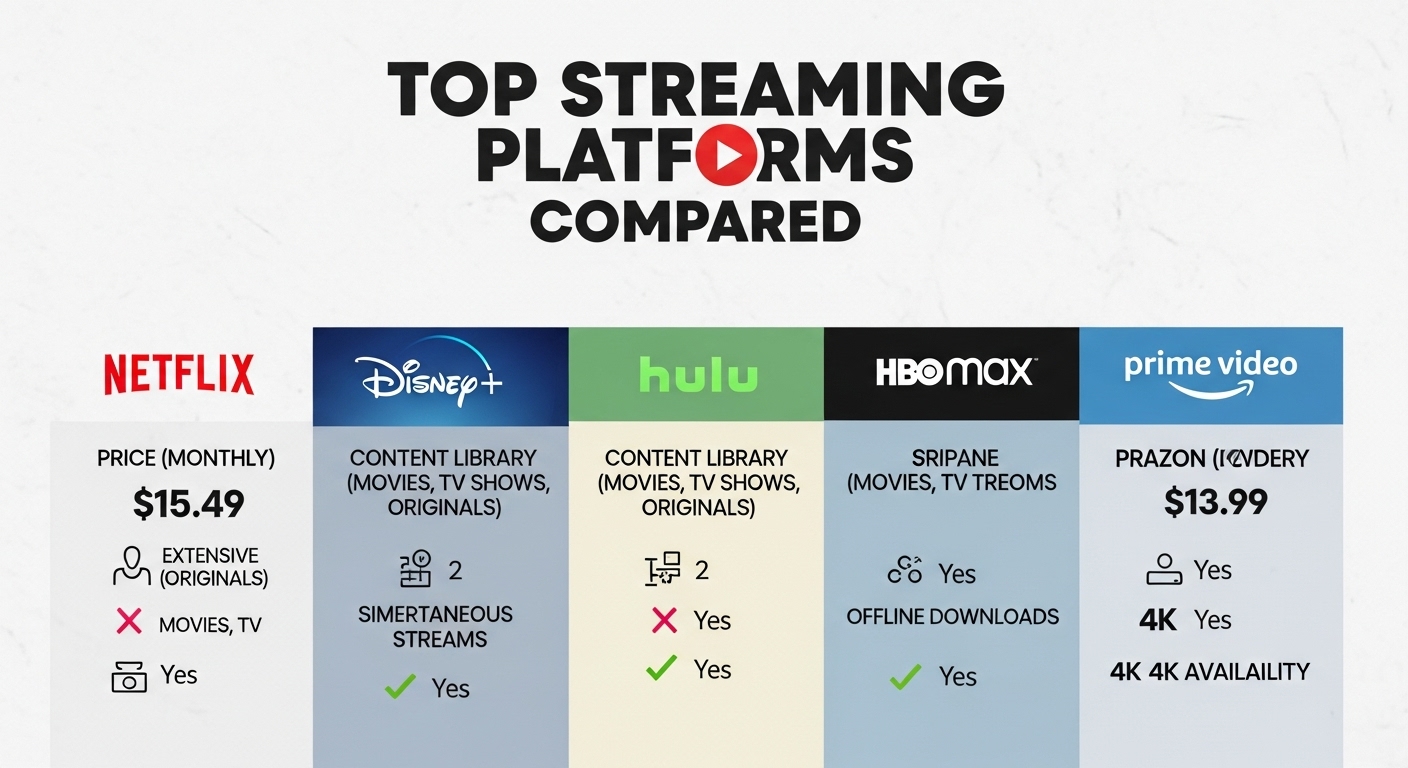
When comparing top streaming platforms, one of the most critical factors is the size and quality of their content libraries. Netflix leads in sheer variety, offering thousands of titles across genres and languages. Disney Plus relies heavily on its blockbuster franchises and family appeal, while Amazon Prime Video blends originals with a large library of licensed films. Hulu excels in providing access to current television, and HBO Max focuses on prestige programming. Apple TV Plus, though smaller, prioritizes high-quality originals, while Peacock and Paramount Plus combine network legacies with new investments. The competition among these platforms has sparked what many call the “streaming wars,” where exclusive content and original productions often determine which service a user subscribes to.
The Role of Price and Accessibility
Price and accessibility also play significant roles in comparing streaming platforms. Some platforms, like Netflix, rely on subscription-only models, while others, such as Amazon Prime Video, are bundled with additional services. Peacock offers a free tier with ads, while Hulu provides multiple subscription options. Accessibility across devices is another factor, with most services available on smartphones, smart TVs, and gaming consoles. International availability also matters, as platforms like Netflix and Amazon Prime Video dominate globally, while services like Hulu remain limited to certain regions. Price-conscious users may prioritize platforms that offer the best value for money, while others may subscribe to multiple services to access a wider range of content.
User Experience and Technology
The success of streaming platforms is not determined by content alone but also by user experience and technological innovation. Platforms that offer intuitive interfaces, personalized recommendations, and seamless streaming gain an advantage. Netflix’s recommendation algorithm is often cited as one of the best in the industry, while Apple TV Plus focuses on simplicity and integration with Apple devices. Amazon Prime Video has faced criticism for its interface, despite its strong content library, while Disney Plus is praised for its clean design. Innovations such as 4K resolution, Dolby Atmos sound, and offline downloads have become standard expectations, and platforms that fail to deliver on these fronts risk losing subscribers.
The Future of Streaming Platforms
The future of streaming platforms will likely be shaped by continued competition, technological advancements, and evolving consumer habits. Consolidation may occur as companies seek to merge resources, while niche platforms may emerge to cater to specific audiences. The role of live sports, interactive content, and integration with emerging technologies like virtual reality could redefine the streaming experience. As traditional studios and networks continue to prioritize their own platforms, the competition for exclusive content will intensify. For consumers, this means greater choice but also potential subscription fatigue, as managing multiple services becomes increasingly complex.
Conclusion
Comparing the top streaming platforms reveals a dynamic and competitive industry where each service brings its own strengths to the table. Netflix remains a pioneer with unmatched variety, Amazon Prime Video leverages bundling power, Disney Plus thrives on iconic franchises, and Hulu bridges the gap between traditional television and streaming. HBO Max emphasizes prestige storytelling, Apple TV Plus champions quality over quantity, Peacock combines live and on-demand content, and Paramount Plus builds on its rebranded network legacy. Each platform appeals to different audiences, ensuring that streaming remains a diverse and ever-evolving industry. As technology advances and competition intensifies, these platforms will continue to innovate, shaping the way the world consumes entertainment for years to come.