
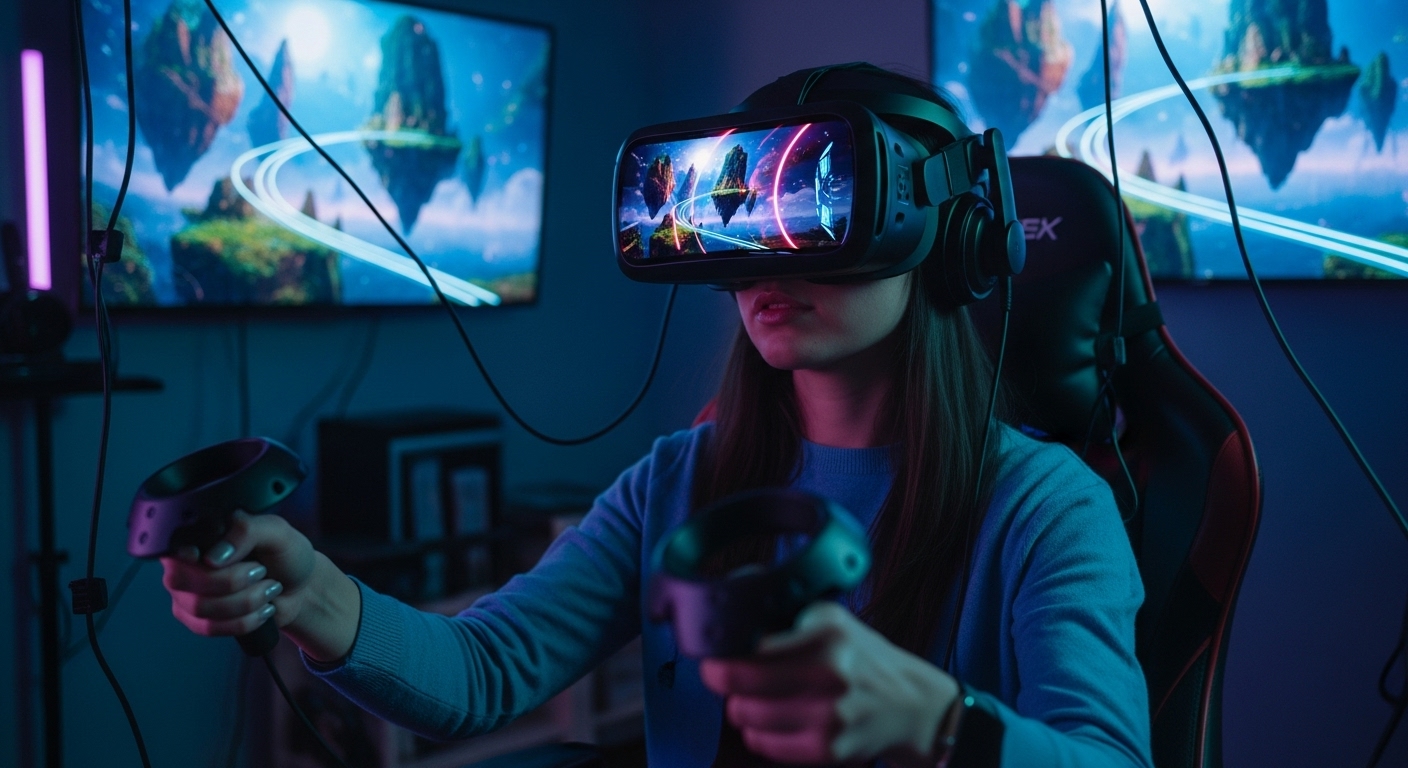
The Digital Frontier: How Technology is Redefining the Modern World
Introduction
Technology has become the heartbeat of the modern era, shaping how we live, work, communicate, and even think. From artificial intelligence to quantum computing, innovations are emerging at an unprecedented pace, altering every aspect of human existence. What was once considered futuristic—robots performing surgeries, cars driving themselves, or virtual assistants managing our lives—is now part of our daily reality. The digital revolution is not just transforming industries but also redefining human potential, pushing boundaries, and creating a world where imagination meets innovation.
The Evolution of Technology
The story of technology is one of constant evolution. In the early days, technology was primarily mechanical—tools made of stone, simple machines, and rudimentary inventions that eased manual labor. The Industrial Revolution marked the beginning of large-scale technological advancement with the introduction of steam engines, electricity, and manufacturing automation.
However, the true transformation began with the advent of the computer age in the 20th century. Computers evolved from room-sized machines to pocket-sized powerhouses capable of performing billions of operations per second. The internet then connected the world, leading to the birth of the information age. Today, we are living in the era of intelligent technology—where data, automation, and connectivity define how societies function.
Artificial Intelligence: The Mind of Machines
Artificial Intelligence (AI) stands at the core of the current technological revolution. AI enables machines to learn from experience, adapt to new inputs, and perform human-like tasks with precision and speed. From voice assistants like Siri and Alexa to advanced algorithms that power search engines, AI has become deeply integrated into daily life.
Machine learning, a subset of AI, allows systems to improve their performance without explicit programming. This capability powers personalized recommendations on streaming platforms, predictive text on smartphones, and even diagnostic tools in healthcare. Deep learning, a more complex form of machine learning, mimics the human brain through artificial neural networks—making technologies like facial recognition and natural language processing possible.
The potential of AI is vast, but so are its challenges. Ethical concerns regarding data privacy, algorithmic bias, and job displacement remain hot topics. Despite these concerns, the integration of AI across industries continues to grow, promising a future where intelligent machines collaborate seamlessly with humans.
The Rise of Automation and Robotics
Automation and robotics are redefining how businesses operate. In manufacturing, robots have long been used to perform repetitive tasks with high precision. Today, collaborative robots, known as cobots, are working alongside humans, enhancing productivity and safety.
In logistics, automated warehouses are revolutionizing inventory management and delivery systems. Drones and autonomous delivery vehicles are becoming a reality, enabling faster and more efficient transportation of goods.
In healthcare, surgical robots are assisting doctors in performing complex procedures with remarkable accuracy. Service robots in hotels, restaurants, and hospitals are simplifying customer service and operational tasks. The goal of automation is not to replace humans but to empower them—allowing workers to focus on creative and strategic roles while machines handle the repetitive and hazardous tasks.
The Internet of Things: A Connected Ecosystem
The Internet of Things (IoT) has transformed everyday objects into smart devices that communicate with each other through the internet. From smart thermostats that adjust room temperature to wearable fitness trackers monitoring health, IoT has created an interconnected digital ecosystem.
In smart cities, IoT technology helps manage traffic flow, reduce energy consumption, and improve public safety. In agriculture, IoT sensors monitor soil moisture and crop health, allowing farmers to optimize yields. The healthcare industry benefits from IoT through remote patient monitoring, which enables real-time data analysis and quicker response times during medical emergencies.
However, as IoT expands, so do concerns about cybersecurity. With billions of connected devices, protecting personal data and preventing cyberattacks have become major priorities. The challenge lies in creating secure, reliable systems that maintain privacy while enabling innovation.
Cloud Computing: The Backbone of the Digital World
Cloud computing has revolutionized how businesses and individuals store and access data. Instead of relying on physical servers, cloud technology allows users to access computing resources on demand through the internet. This shift has drastically reduced infrastructure costs and enabled greater scalability and flexibility.
Companies can now deploy applications, manage data, and analyze information in real-time without maintaining physical servers. Cloud services have become the backbone of modern enterprises, supporting everything from software development to remote collaboration.
For individuals, cloud storage offers convenience and accessibility. Files, photos, and documents can be stored securely and accessed from any device, anywhere in the world. The rise of cloud technology has also paved the way for innovations such as remote learning, telemedicine, and digital collaboration—making it one of the most transformative developments of the 21st century.
The Power of Big Data and Analytics
In the digital era, data is the new oil. Every online activity—searches, purchases, social interactions—creates data that can be analyzed to generate insights. Big Data refers to the massive volumes of structured and unstructured data that organizations collect daily.
Through advanced analytics and AI algorithms, businesses can identify trends, predict consumer behavior, and make informed decisions. In finance, data analytics helps detect fraudulent transactions. In healthcare, it assists in disease prediction and personalized treatment plans. In marketing, it enables brands to target audiences with greater precision.
The challenge, however, lies in managing and securing this data responsibly. Ethical data usage, transparency, and privacy protection are essential to maintaining public trust in a data-driven world.
Cybersecurity: The Digital Shield
As technology advances, so do cyber threats. Cybersecurity has become a critical aspect of the digital world, protecting systems, networks, and data from malicious attacks. With the rise of remote work and cloud computing, the attack surface for cybercriminals has expanded dramatically.
Cyberattacks can disrupt economies, compromise sensitive data, and damage reputations. To counter these threats, cybersecurity measures such as encryption, multi-factor authentication, and advanced firewalls have become standard practice. Artificial intelligence is also being used to detect anomalies and prevent potential breaches in real-time.
Educating individuals and organizations about cybersecurity hygiene—such as recognizing phishing scams and using strong passwords—is equally important. As technology continues to evolve, a proactive approach to digital security will remain vital.
The Emergence of Quantum Computing
Quantum computing represents the next frontier in technological innovation. Unlike traditional computers that process data in binary bits (0s and 1s), quantum computers use quantum bits, or qubits, which can exist in multiple states simultaneously. This allows quantum computers to perform complex calculations at speeds unimaginable with classical systems.
While still in the experimental phase, quantum computing has the potential to revolutionize industries. It could accelerate drug discovery, optimize logistics, enhance cryptography, and solve problems that current computers cannot handle efficiently. Although widespread adoption may still be years away, progress in quantum research is rapidly gaining momentum.
The Future of Human-Technology Interaction
As technology becomes more integrated into daily life, the line between the physical and digital worlds continues to blur. Augmented reality (AR) and virtual reality (VR) are creating immersive experiences that redefine entertainment, education, and communication.
Wearable technology and brain-computer interfaces are enhancing human capabilities, allowing users to control devices with their thoughts. The rise of smart homes and virtual assistants is simplifying routines, creating a future where living spaces adapt intuitively to human needs.
However, as human-technology interaction deepens, ethical questions arise. How much control should machines have? How do we balance convenience with privacy? The answers to these questions will shape the future of human existence in a digital world.
The Sustainable Side of Technology
Sustainability is becoming a key focus of technological development. Green technology aims to reduce environmental impact through renewable energy, electric vehicles, and sustainable manufacturing. Companies are leveraging technology to minimize carbon footprints and promote eco-friendly innovation.
For instance, AI is being used to optimize energy consumption, while smart grids improve the efficiency of power distribution. Recycling technologies are transforming waste management, and advancements in clean energy are driving a shift toward a greener planet. The fusion of technology and sustainability offers hope for a balanced coexistence between progress and the environment.
Conclusion
Technology is more than a collection of tools; it is the engine of human advancement. Every breakthrough opens new possibilities, driving humanity toward a smarter, more connected, and more efficient future. Yet, with great power comes great responsibility. Ensuring that technological progress aligns with ethical principles, social well-being, and environmental sustainability is essential.
As we step deeper into the digital frontier, the challenge is not just to innovate but to innovate wisely. The future will belong to those who harness technology not just for convenience or profit, but for the greater good of humanity. The story of technology is still being written—and it promises to be the most transformative chapter in human history.