
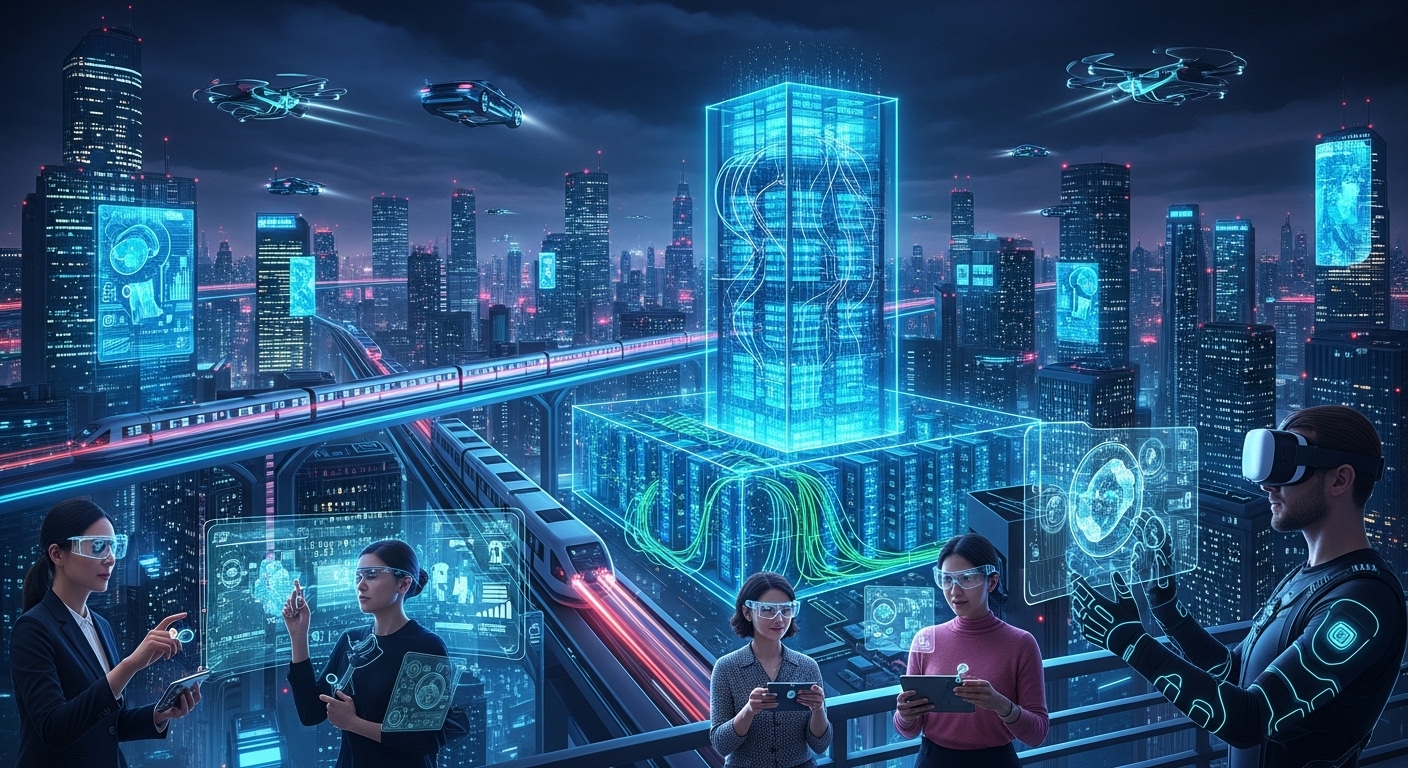
Technology has always been the heartbeat of human progress. From the wheel to artificial intelligence, every invention has reshaped the way people live, work, and communicate. In today’s era, technology moves faster than ever before, transforming industries, redefining relationships, and creating a new digital ecosystem that affects every part of human existence. The modern world thrives on technology, and it’s impossible to imagine life without it. Whether it’s the smartphone in your hand, the algorithms that suggest your next favorite show, or the satellites mapping the earth, technology is everywhere, silently guiding the flow of modern civilization.
The Digital Revolution: A New Era of Connectivity
One of the most significant transformations of the past few decades has been the digital revolution. It started with computers and evolved into the internet, connecting people across continents in real time. The rise of smartphones took it even further, putting the world in everyone’s pocket. With a few taps, people can shop, learn, communicate, and even work from anywhere. This level of connectivity has made geography less relevant and created a truly global society.
The digital age also gave rise to social media platforms that became powerful tools for communication and expression. They’ve not only changed how people interact but also influenced politics, business, and entertainment. The world’s conversations happen online, and technology ensures that those conversations are instant, global, and impactful. The digital space is now the center of human interaction—a living, breathing organism that grows with every click and swipe.
Artificial Intelligence: The Mind of the Machine
Artificial intelligence, or AI, is perhaps the most fascinating and transformative technology of the 21st century. It’s no longer confined to science fiction. AI is now part of daily life, whether through voice assistants, recommendation systems, or advanced data analysis. What makes AI revolutionary is its ability to learn and adapt. Machines that once required detailed instructions can now understand context, predict outcomes, and even create original content.
Industries across the world are integrating AI to improve efficiency and accuracy. In healthcare, AI helps doctors diagnose diseases faster by analyzing medical images. In finance, algorithms detect fraud within seconds. In transportation, self-driving cars are becoming smarter every day, promising safer and more efficient roads. AI is not just improving existing systems—it’s creating entirely new ones.
However, as AI grows more powerful, questions about ethics, privacy, and control emerge. Who owns the data? How transparent should AI decisions be? These debates shape the future of technology and determine how humanity coexists with intelligent machines. While AI can solve many problems, it also challenges society to rethink concepts of work, creativity, and human identity.
The Internet of Things: A Connected World
The Internet of Things (IoT) represents another step toward a fully connected world. It links everyday objects—like refrigerators, watches, cars, and even cities—to the internet. These devices communicate with each other, collect data, and make life more convenient. Imagine a world where your car knows your schedule, your home adjusts the temperature before you arrive, and your phone reminds you to buy groceries based on what’s missing in the fridge. That world is already here.
IoT technology is not limited to personal convenience. It plays a massive role in industries, agriculture, and infrastructure. Smart factories monitor machinery in real time, reducing downtime and boosting productivity. Smart farms use sensors to measure soil conditions and optimize water use, making agriculture more sustainable. Smart cities manage traffic, energy, and waste with remarkable precision, improving the quality of urban life. The IoT ecosystem continues to grow, blurring the line between the digital and physical worlds.
Cloud Computing: The Power Beyond Hardware
Cloud computing has redefined how businesses and individuals use technology. In the past, storing and managing data required physical servers and complex infrastructure. Now, with cloud technology, anyone can access powerful computing resources on demand. This flexibility has fueled innovation across sectors. Startups can scale without huge upfront costs, and individuals can store their photos, videos, and documents securely without worrying about storage limits.
Cloud computing has also enabled remote work and collaboration. Teams spread across the globe can work together in real time using shared digital environments. This shift has revolutionized the modern workplace, allowing for more flexible work arrangements and improving global productivity. The cloud also forms the backbone of other technologies like AI and IoT, offering the computational power and storage they need to function.
The Rise of Automation and Robotics
Automation and robotics have become integral to modern industry. From manufacturing to healthcare, robots perform tasks that were once repetitive, dangerous, or time-consuming. In factories, robots assemble products with incredible precision and speed. In hospitals, robotic arms assist surgeons during complex operations. Automation has reduced costs, improved accuracy, and increased safety in countless fields.
However, the rapid advancement of robotics raises important social and economic questions. As machines become capable of performing human jobs, what happens to the workforce? This shift requires rethinking education and skill development. Workers must adapt to new roles that complement technology rather than compete with it. The balance between human and machine collaboration is key to ensuring that automation benefits everyone.
Virtual and Augmented Reality: Expanding Human Experience
Virtual Reality (VR) and Augmented Reality (AR) are transforming how people interact with digital information. VR immerses users in fully digital environments, while AR overlays digital elements onto the real world. These technologies are no longer limited to gaming—they’re being used in education, healthcare, design, and even tourism.
Students can explore historical events or scientific concepts through immersive simulations, making learning more engaging and memorable. Doctors can use AR to visualize anatomy during surgery, increasing precision and safety. Architects can design and present projects in virtual spaces, allowing clients to “walk through” a building before it’s constructed.
The fusion of VR and AR with AI and cloud computing is creating a new dimension of digital experience known as mixed reality. This evolving field could redefine communication, creativity, and entertainment in the coming decades.
The Role of Cybersecurity in a Digital World
As technology becomes more integrated into daily life, cybersecurity grows increasingly important. Every connected device, online transaction, and cloud-based system represents a potential vulnerability. Cyber threats have evolved from simple viruses to sophisticated attacks targeting corporations, governments, and individuals.
To counter these threats, cybersecurity has become a dynamic field, combining encryption, AI-driven threat detection, and advanced network protection. Education and awareness also play critical roles, as human error often leads to breaches. Protecting data is not just a technical issue but a fundamental part of maintaining trust in the digital age.
Cybersecurity will continue to be one of the most vital aspects of technology’s future. As digital transformation accelerates, building secure systems will determine whether innovation leads to progress or chaos.
Biotechnology and Human Enhancement
Technology’s impact extends beyond machines and data—it now reaches into biology. Biotechnology merges technology with life sciences to create medical treatments, genetic modifications, and bio-engineered materials. From gene editing tools like CRISPR to wearable health monitors, technology is helping humans understand and improve their own biology.
This has enormous potential for curing diseases, extending life expectancy, and enhancing physical and cognitive performance. However, it also raises ethical dilemmas about how far humanity should go in altering nature. As biotechnology advances, society must balance innovation with responsibility, ensuring that progress serves everyone fairly.
Sustainability and Green Technology
One of the most pressing challenges of the modern world is environmental sustainability. Technology plays a dual role—it contributes to pollution and resource consumption, but it also offers solutions. Renewable energy technologies like solar and wind power are becoming more efficient and affordable. Electric vehicles are reducing dependence on fossil fuels. Smart grids optimize energy distribution, while AI helps predict and manage environmental risks.
The development of green technology reflects a growing awareness that innovation must be sustainable. Companies and governments around the world are investing in clean energy, circular economies, and eco-friendly materials. This fusion of technology and environmental consciousness is shaping a new kind of progress—one that values both growth and preservation.
The Future of Human Interaction
Technology has redefined how humans interact—not just with each other but with the world around them. Digital communication tools allow instant connection across vast distances, but they also change social behavior. Virtual communities and online identities have become extensions of real life. The challenge is maintaining authenticity and emotional connection in a digital landscape dominated by screens and algorithms.
At the same time, technology is enhancing human communication through tools like real-time translation, accessibility software, and immersive media. These innovations are breaking barriers and fostering global understanding. As the line between physical and digital life continues to blur, society will need to find balance—to use technology as a bridge, not a wall.
Conclusion: The Infinite Journey of Innovation
Technology is not just a collection of tools—it’s the story of human curiosity, creativity, and ambition. Every invention builds upon the last, shaping a world that evolves faster than ever before. The future of technology promises wonders that today might seem unimaginable—quantum computing, brain-machine interfaces, interplanetary communication, and more.
But with great power comes great responsibility. The choices made today will determine whether technology becomes a force for unity and progress or division and exploitation. Humanity stands at the edge of endless possibility, and it must choose wisely how to shape the digital future.
In the end, technology is a reflection of human potential. It mirrors our greatest strengths and our deepest challenges. As long as curiosity drives us forward, the journey of innovation will never end, and the horizon of technology will continue to expand beyond imagination.