
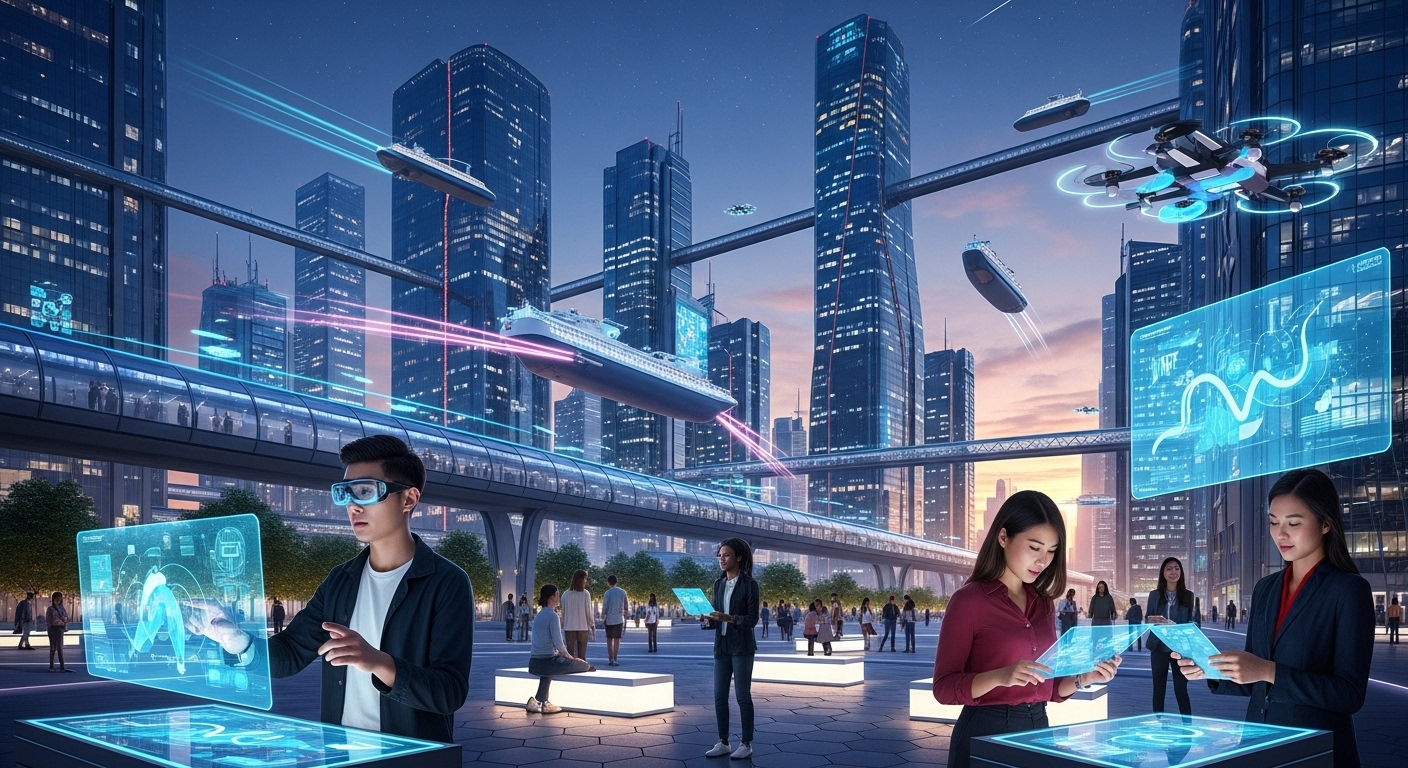
Technology has always been a catalyst for human progress. From the first tools and inventions to the digital revolution, each advancement has redefined how people live, work, and interact. Today, we are entering a new era defined by intelligent technologies such as artificial intelligence, automation, the Internet of Things, and advanced computing systems. These innovations are not just enhancing our daily lives—they are fundamentally reshaping industries, economies, and even societal norms. This blog explores the transformative power of modern technology, its impact on various sectors, and the ethical considerations that come with it.
Understanding Artificial Intelligence
Artificial intelligence, commonly known as AI, is the cornerstone of the current technological revolution. It refers to the development of computer systems capable of performing tasks that normally require human intelligence, including reasoning, learning, problem-solving, and decision-making.
AI in Everyday Life
Artificial intelligence has become part of our daily routine in ways many people do not even realize. From virtual assistants that respond to voice commands to recommendation algorithms in streaming services, AI personalizes and enhances experiences. In healthcare, AI analyzes complex medical data to help doctors identify diseases, predict treatment outcomes, and even recommend personalized therapies. By assisting professionals and reducing manual workloads, AI improves efficiency and accuracy in both personal and professional domains.
AI’s Industrial Impact
AI is revolutionizing industries on a global scale. In finance, AI algorithms detect fraudulent activities, optimize trading strategies, and analyze risk patterns. Manufacturing industries utilize AI for predictive maintenance, quality control, and optimizing production lines. In agriculture, AI-powered sensors monitor crop health, predict weather impacts, and automate irrigation systems. Across sectors, AI not only boosts productivity but also encourages innovation by providing insights and predictive analytics that were previously unattainable.
Automation: Redefining Work and Productivity
Automation extends beyond traditional factory floors. It now encompasses software processes, logistics, and even creative tasks. Automation involves using technology to perform repetitive or structured tasks with minimal human intervention, increasing efficiency and reducing human error.
Automation in the Workplace
Automation is transforming the modern workplace. Administrative tasks such as data entry, report generation, and customer service inquiries are increasingly handled by intelligent systems. Logistics companies employ automated warehouses and delivery systems, while autonomous vehicles are gradually altering transportation and delivery networks. These changes improve operational efficiency and reduce human workload, allowing employees to focus on strategic and creative work.
Creative Automation
Contrary to the perception that automation only impacts routine jobs, it is also influencing creative industries. AI-assisted tools can generate music, art, and content, providing inspiration and expanding creative possibilities. Rather than replacing human creativity, automation collaborates with humans, enabling artists, writers, and designers to explore new avenues of innovation.
The Internet of Things: A Connected Ecosystem
The Internet of Things, or IoT, refers to a network of interconnected devices that collect, analyze, and exchange data. IoT spans smart home devices, industrial sensors, wearable technology, and urban infrastructure, creating a seamlessly connected ecosystem.
Smart Homes and Cities
IoT enables the creation of smart homes where devices communicate to improve convenience, security, and energy efficiency. Thermostats learn user preferences, lights adjust automatically, and appliances can be monitored remotely. On a larger scale, smart cities leverage IoT technology to manage traffic, monitor environmental conditions, and optimize public services. These innovations enhance urban living, reduce energy consumption, and improve overall quality of life for residents.
Industrial and Healthcare Applications
Industrial sectors benefit from IoT through real-time monitoring, predictive maintenance, and improved supply chain management. In healthcare, wearable devices track vital signs, monitor patient activity, and transmit data to medical professionals, allowing for proactive healthcare and remote patient monitoring. IoT integration in healthcare is improving patient outcomes and creating more efficient care systems.
Cybersecurity: Protecting the Digital Realm
As technology becomes deeply integrated into society, cybersecurity has emerged as a critical concern. AI, IoT, and cloud computing have expanded the digital landscape, creating new vulnerabilities that must be addressed.
Modern Threats
Cyber threats are evolving rapidly. AI-powered malware can adapt to bypass traditional security measures, while phishing and ransomware attacks exploit human behavior. The interconnected nature of IoT devices means that a single vulnerability can compromise entire networks, creating cascading risks across industries.
Strengthening Cyber Defenses
To protect data and digital infrastructure, organizations are investing in AI-driven threat detection, encryption, and proactive monitoring systems. Individuals can safeguard their digital presence by adopting strong passwords, enabling multi-factor authentication, and maintaining awareness of online security practices. Robust cybersecurity measures are essential for ensuring trust and reliability in a digitally connected world.
Ethical Considerations in Technology
While technology provides significant advantages, it also raises ethical questions related to AI decision-making, privacy, and environmental sustainability.
Bias and Fairness
AI systems can inadvertently reflect the biases present in their training data, resulting in unfair outcomes in areas such as hiring, lending, and law enforcement. Ensuring transparency, fairness, and accountability in AI systems is crucial to maintaining ethical standards and public trust.
Environmental Impact
Modern technology consumes large amounts of energy, particularly in data centers, cryptocurrency mining, and high-performance computing. Adopting sustainable practices, including energy-efficient hardware and eco-friendly cloud solutions, is essential for reducing the environmental impact of technological progress.
Emerging Technologies on the Horizon
The future of technology promises to be even more transformative with developments such as quantum computing, augmented reality, and brain-computer interfaces.
Quantum Computing
Quantum computing has the potential to solve problems that are beyond the reach of classical computers. Applications include optimizing logistics, simulating complex chemical reactions, and advancing medical research. Quantum computing represents a significant leap in computational power, opening new possibilities for science and industry.
Augmented and Virtual Reality
Augmented reality (AR) and virtual reality (VR) are changing the way we interact with the world. AR overlays digital information onto the physical environment, enhancing education, navigation, and design processes. VR creates immersive experiences that transform entertainment, training, and remote collaboration, bridging the gap between digital and physical experiences.
Brain-Computer Interfaces
Brain-computer interfaces (BCIs) are on the cutting edge of technology, allowing direct communication between the human brain and computers. BCIs have applications in accessibility, enabling individuals with disabilities to control devices, and in enhancing cognitive and sensory experiences. This technology has the potential to redefine human-machine interaction entirely.
Preparing for a Technological Future
Adapting to rapid technological change requires a focus on learning, adaptability, and ethical responsibility. Education systems must equip individuals with digital literacy, critical thinking, and problem-solving skills. Policymakers and organizations should foster innovation while implementing frameworks that protect privacy, security, and public welfare.
The goal is to ensure that technology enhances human potential without creating unnecessary risks or inequality. By promoting responsible innovation, society can maximize the benefits of emerging technologies while minimizing negative consequences.
Conclusion: Embracing the Era of Intelligent Innovation
The modern technological revolution is reshaping the way humans live and work. Artificial intelligence, automation, IoT, and emerging technologies like quantum computing and augmented reality are transforming industries, cities, and individual lives. While these changes offer remarkable opportunities, they also present challenges in ethics, security, and sustainability.
By embracing technology thoughtfully and responsibly, society can unlock its full potential. Intelligent innovation is not just about machines performing tasks—it is about enhancing human capabilities, improving quality of life, and opening doors to possibilities that were once unimaginable. The future belongs to those who can harness the power of technology while navigating its challenges with wisdom and foresight.
The era of intelligent innovation is here, and it is shaping a future where technology and humanity progress hand in hand.